PVC Roofing in Provo, UT
Commercial Roofing • Commercial Roofing Services • Provo,
Why Grease and Chemical Exposure Push Owners Toward PVC
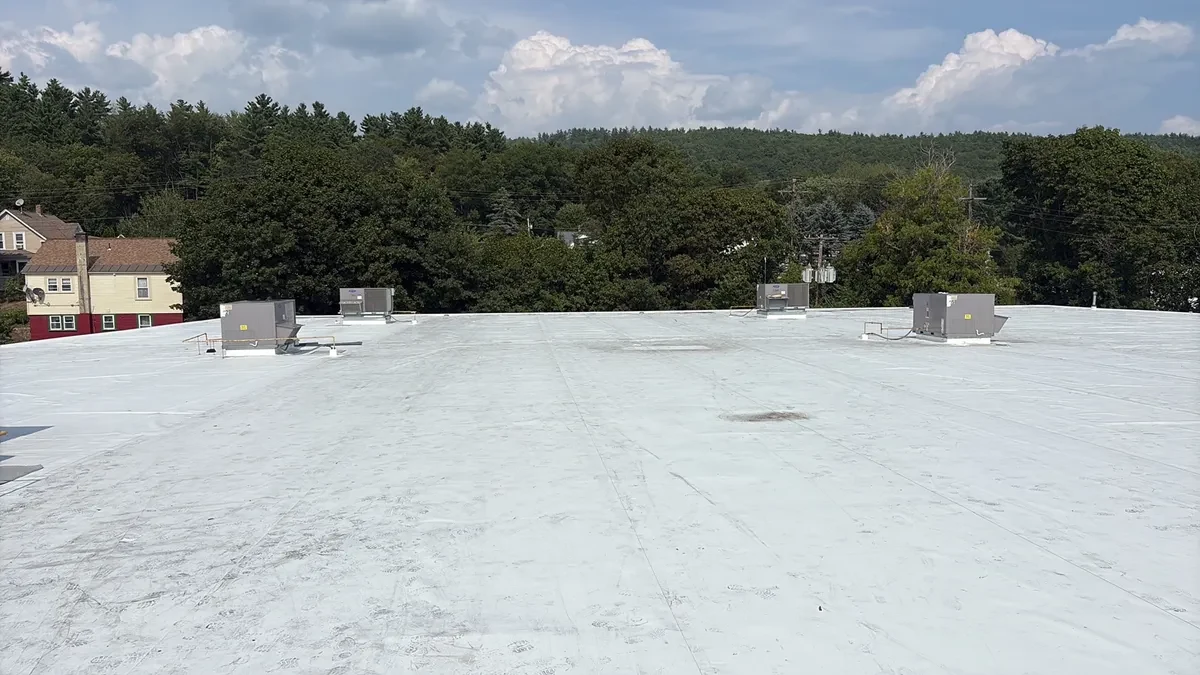
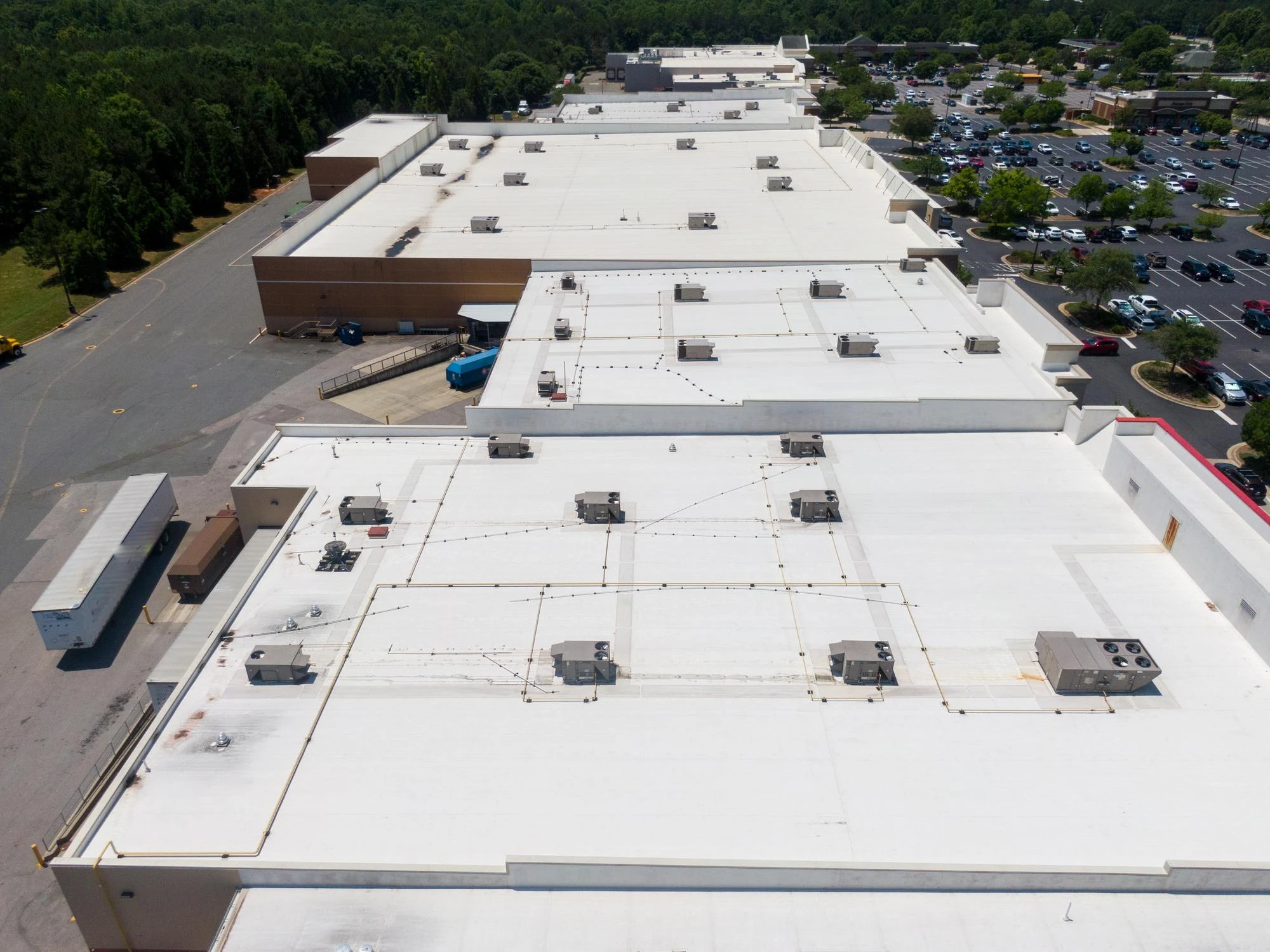
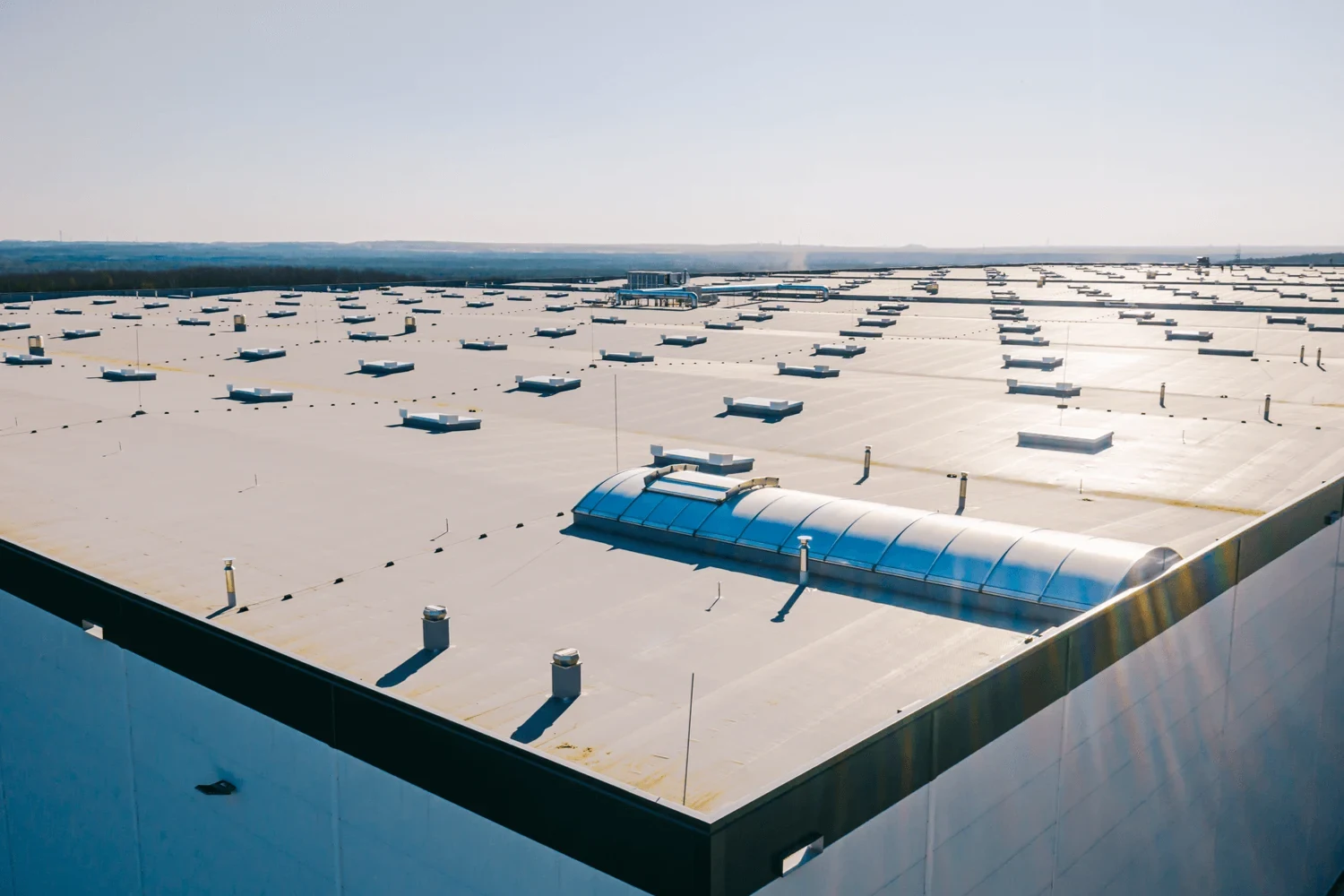
PVC single-ply membrane costs more than TPO, but it earns its keep on roofs exposed to grease, oils, or chemical fumes that would degrade a standard thermoplastic over time. We install and repair PVC across Provo and Orem, mostly on restaurant, grocery, and healthcare buildings where kitchen exhaust or rooftop equipment puts the membrane in contact with substances a typical roof never sees.
Grease Vents and Rooftop Kitchen Exhaust
Standalone restaurants and the food courts inside retail centers near University Place and Riverwoods put grease-laden exhaust directly onto the roof surface around kitchen vent penetrations. TPO can degrade under sustained grease exposure, developing brittleness and seam failure years earlier than expected. PVC's chemical composition resists that degradation, which is why we specify it around grease vent curbs even on roofs that otherwise use a different membrane elsewhere in the field.
Grocery stores present a similar exposure through refrigeration condenser oils and exhaust from in-house bakeries and delis, and hospital and medical office rooftops often have exhaust from sterilization or lab equipment that behaves the same way over years of exposure.
Reflectivity and HVAC Load in a High-UV Climate
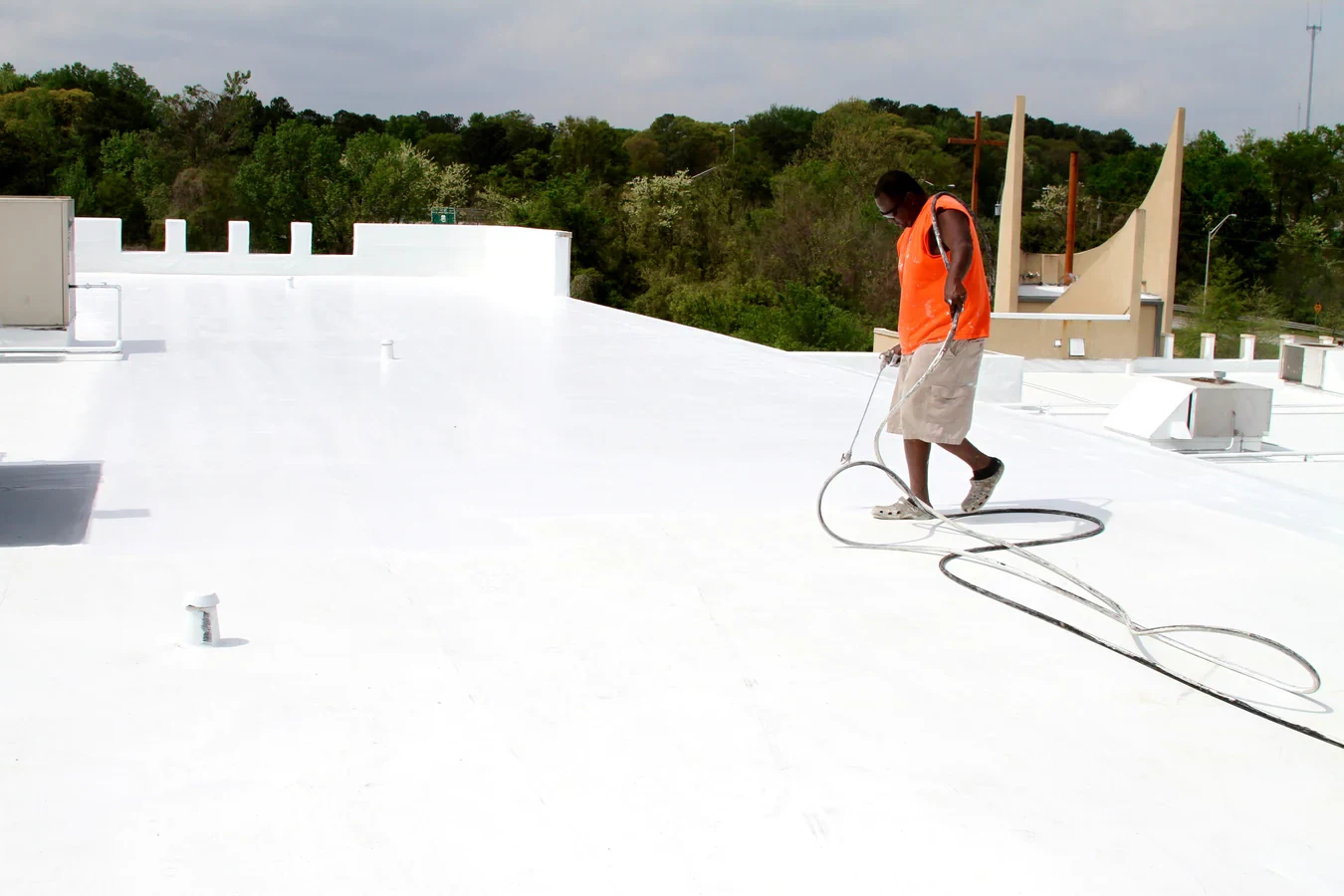
Beyond chemical resistance, PVC membrane is typically bright white and highly reflective, which matters at Provo's elevation where UV intensity is higher than at sea level. A reflective PVC roof keeps deck temperatures lower under direct summer sun, easing the load on rooftop refrigeration and HVAC equipment that restaurant and grocery buildings depend on. For a grocery store running walk-in coolers and freezer condensers on the roof, lower ambient roof temperature translates directly into less strain on that equipment during the hottest part of the year.
Hot-Air Welded Seams in Freeze-Thaw Conditions
Like TPO, PVC seams are hot-air welded rather than adhesive-taped, which gives them strong long-term seam integrity under the repeated freeze-thaw cycling that Wasatch Front winters put on a roof. We test weld strength on every seam during installation and again during service inspections, since a weld that appears sound on the surface can still separate under sustained thermal cycling if it was under-heated originally.
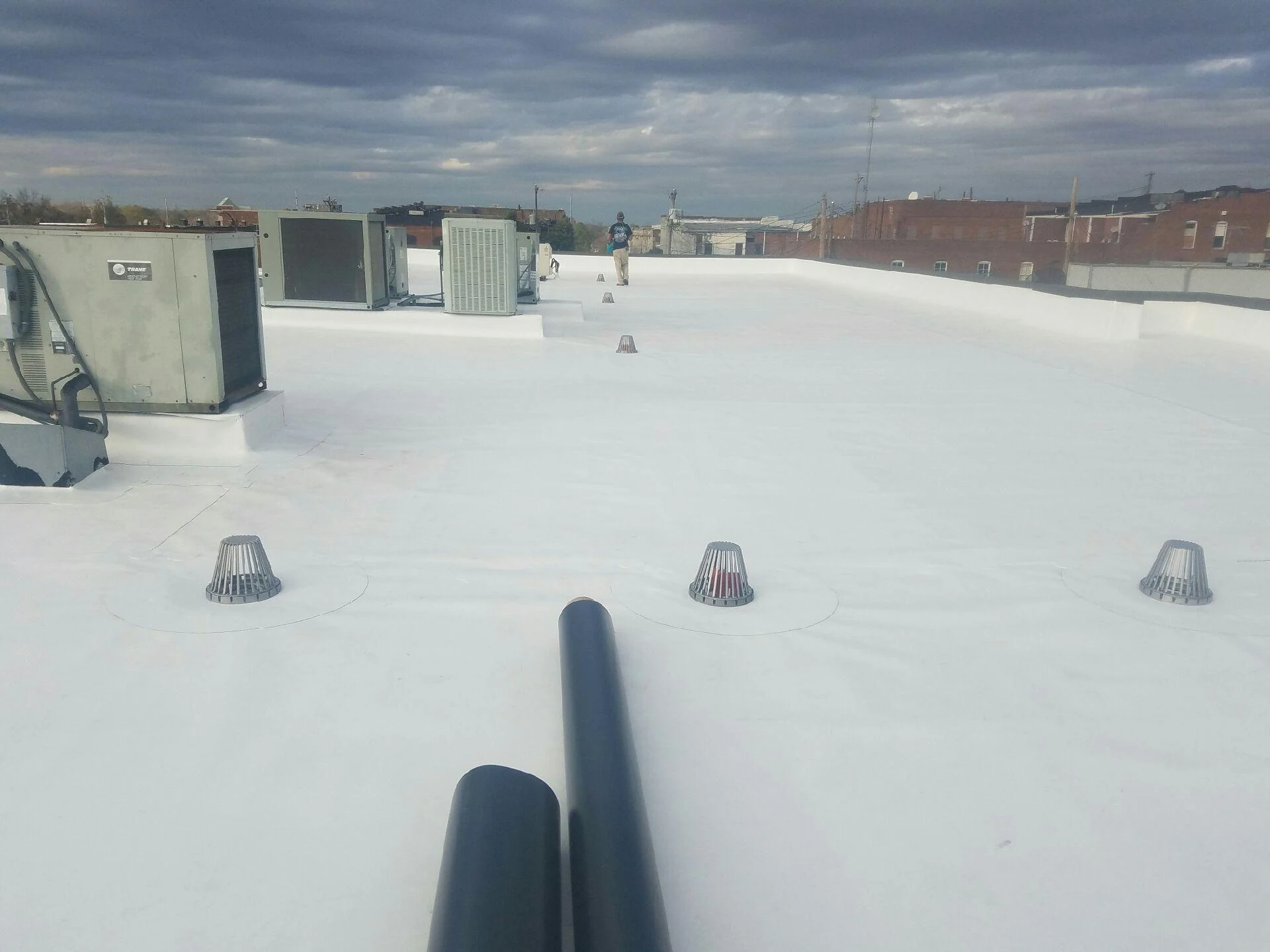
PVC also handles standing water at rooftop drains and low spots better than some alternatives, which matters on grocery and big-box retail roofs where large flat areas and multiple rooftop units create more opportunities for drainage to pool after a snowmelt event.
Ponding Water and Parapet Detailing
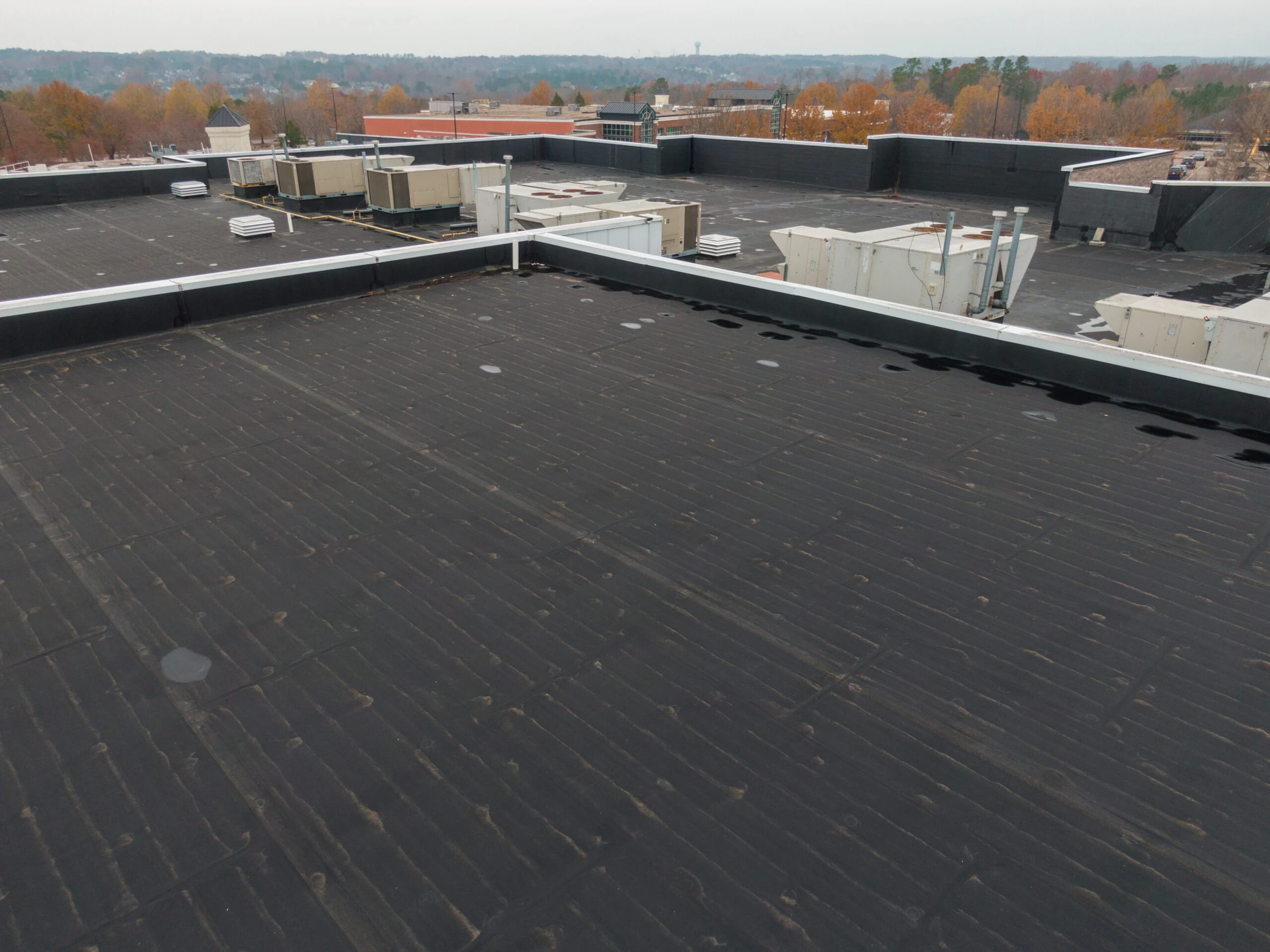
Snow load and freeze-thaw cycling both interact with drainage in ways that show up as ponding, especially near parapet walls and around rooftop equipment curbs where snow drifts and melts unevenly. We check parapet flashing height and drain placement closely on PVC installations, since standing water sitting against a poorly flashed parapet base is one of the more common failure points we find on inspection.
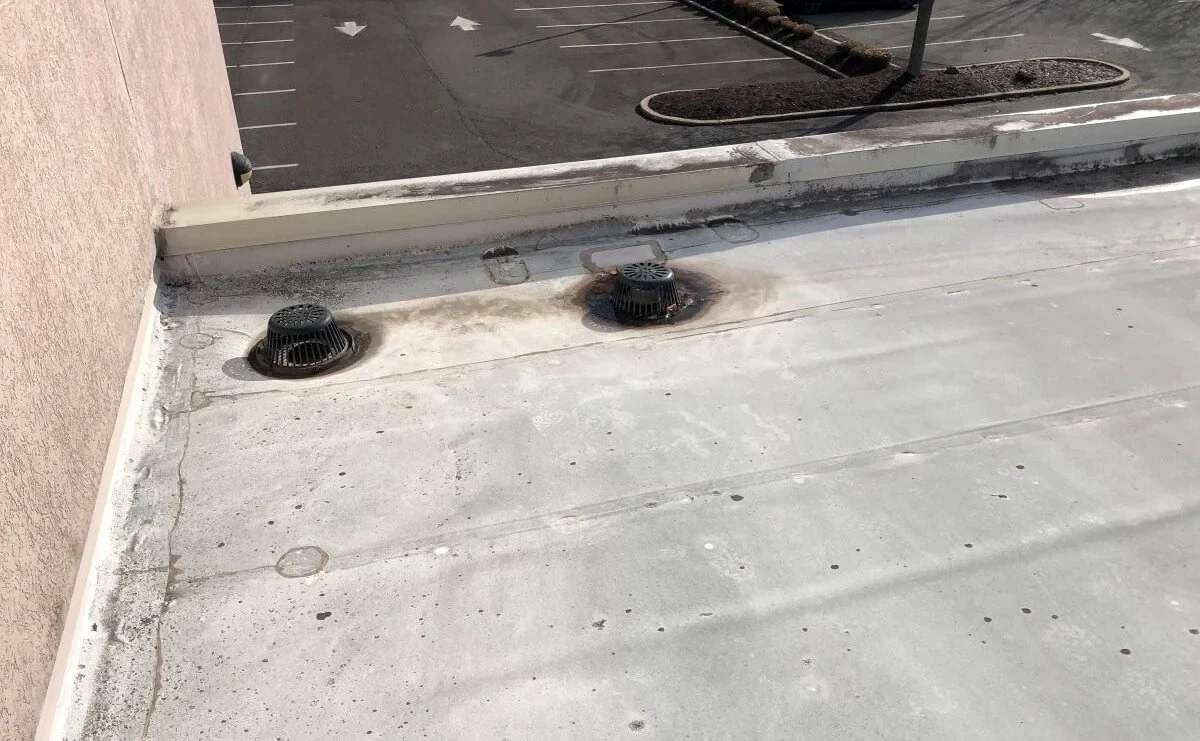
Roof drains and scuppers themselves also need attention through a Utah County winter. Snow can bridge over a drain opening and melt slowly enough that water backs up under the membrane edge before it ever reaches the drain body. We flag undersized or poorly placed drainage during PVC inspections and recommend additional drains or scuppers where the existing layout cannot keep up with a heavy snowmelt event.
Detailing Around Rooftop Units and Curbs
Grocery and restaurant roofs typically carry more rooftop penetrations per square foot than a standard office building, between condenser units, exhaust fans, and makeup air equipment. Each penetration is a potential leak point, and PVC's weldability makes it easier to detail tightly around irregular curb shapes than some adhesive-seamed alternatives. We take extra time on curb flashing during installation because a poorly detailed curb is where most PVC roof leaks we get called out for actually originate, not in the open field of the membrane.
- Standalone restaurant roofs with grease vent exposure
- Grocery store roofs with refrigeration condenser oils
- Hospital and medical office buildings with lab or sterilization exhaust
- Big-box retail with heavy rooftop HVAC equipment loads
- Manufacturing buildings with chemical fume exposure
Cost Versus Long-Term Value
PVC typically costs more up front than TPO of comparable thickness, and we are direct with owners about that difference. The case for PVC comes down to the specific exposure the roof faces. On a building without grease, chemical, or heavy chemical fume exposure, TPO usually delivers similar reflectivity and energy performance for less money. Where that exposure exists, the extended service life PVC provides around vulnerable areas typically outweighs the higher initial cost within a normal ownership horizon.
PVC Roofing Questions From Provo and Orem Owners
Does PVC really last longer than TPO around grease vents?
In our experience, yes. Grease exposure accelerates degradation in standard thermoplastic membranes, while PVC's chemical makeup resists that specific type of breakdown.
Is PVC worth the added cost on a building without grease exposure?
Usually not. For most office, warehouse, and general retail roofs without chemical or grease exposure, TPO delivers comparable reflectivity and durability for less money.
How does PVC handle Utah County winters?
Well. Hot-air welded seams hold up under freeze-thaw cycling, and the membrane itself does not become brittle at the temperatures typical of a Wasatch Front winter.
Can PVC be installed as a recover over an existing roof?
Yes, provided the existing deck and insulation test dry and are structurally sound. We evaluate that before recommending recover over full tear-off.
Do you install PVC around existing kitchen equipment without shutting down the restaurant?
In most cases we can phase the work around the vent penetrations and complete grease-exposed areas with minimal disruption to kitchen operations, though full roof replacement does require closing off that section of roof access.
Ready to review the roof scope?
Request a Roof Assessment