Spray Polyurethane Foam in Provo, UT
Commercial Roofing • Roof Systems • Provo,
Spray Foam: The Roof System That Doubles as Insulation
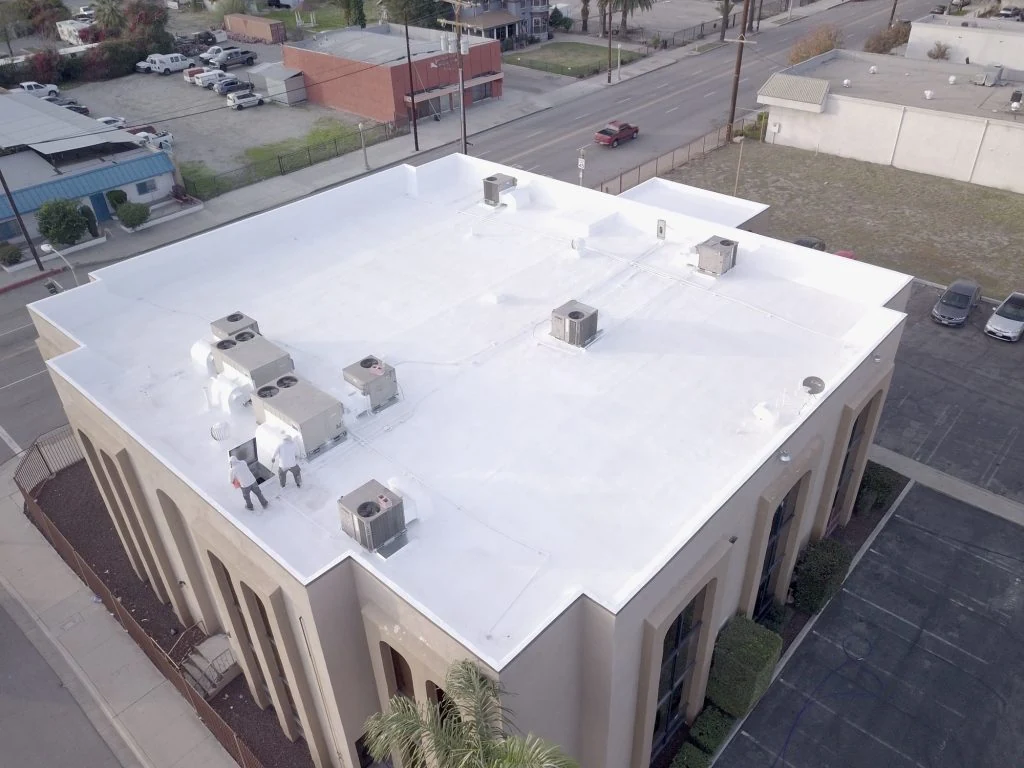
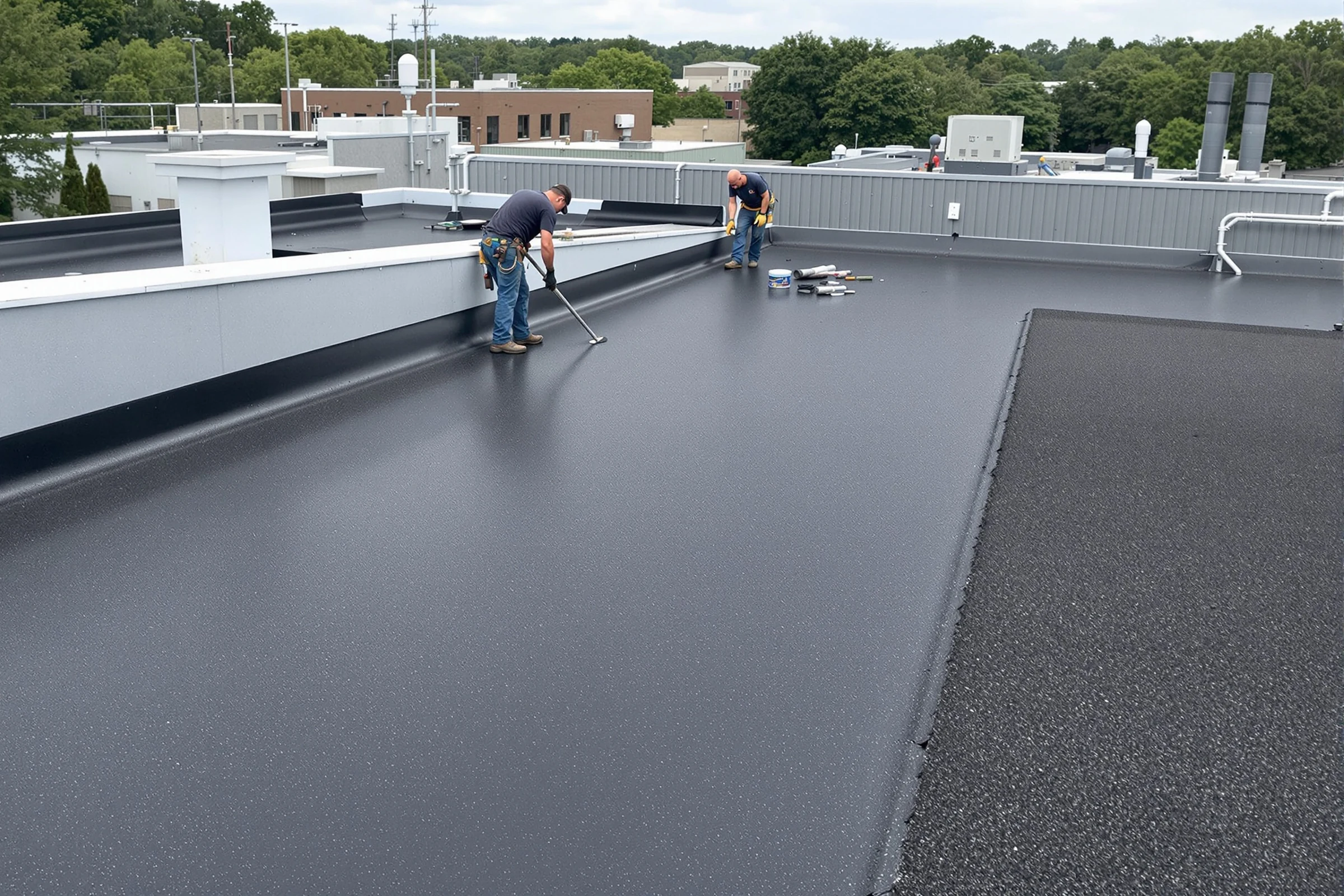
Spray polyurethane foam is the one roof system on our list that isn't a membrane at all, it's a monolithic, self-adhering insulation layer that also waterproofs. That combination makes it a strong fit for older buildings around downtown Provo with irregular roof geometry, poor existing slope, or insulation values that don't come close to meeting current energy code. Instead of adding a membrane over existing insulation, SPF replaces both jobs with one spray-applied system.
Best Insulation Value of Any Roof System We Install
SPF delivers more R-value per inch than any other roofing insulation option, which matters directly on the energy side of a roofing decision. A building with undersized insulation from a decades-old original install can get brought up to, or past, current code minimums without adding excessive roof height, because foam achieves the R-value target in less thickness than rigid board insulation would need. On office and institutional buildings near BYU and UVU with aging mechanical systems, that insulation upgrade often does as much for the HVAC load as anything happening inside the building.
Because the foam is applied as a liquid that expands and cures in place, it also seals around every roof penetration, pipe boots, curbs, drains, without the seams a membrane system relies on. Fewer seams generally means fewer leak paths.
Correcting Drainage Without Rebuilding the Deck
A lot of older flat roofs in Utah Valley have flat or poorly sloped areas that pond water every time it rains or the snow melts. Spray foam can be applied at variable thickness to build in positive slope toward drains, correcting a drainage problem that would otherwise require tearing off the deck and rebuilding tapered insulation from scratch. That's a real advantage on buildings where structural or budget constraints rule out a full tear-off, and it's one of the more common reasons we get called out to look at an older commercial roof here.
UV Exposure and Recoat Maintenance at Elevation
Foam itself isn't UV-stable, so every SPF roof gets a protective coating, typically silicone or acrylic, applied over the cured foam. That coating is what takes the UV exposure, and at Provo's elevation, where UV intensity runs higher than sea-level markets, that coating needs periodic recoating on a maintenance cycle rather than a one-and-done installation. We're upfront about that with owners before they commit to SPF, since skipping recoat maintenance is the fastest way to shorten a foam roof's service life.
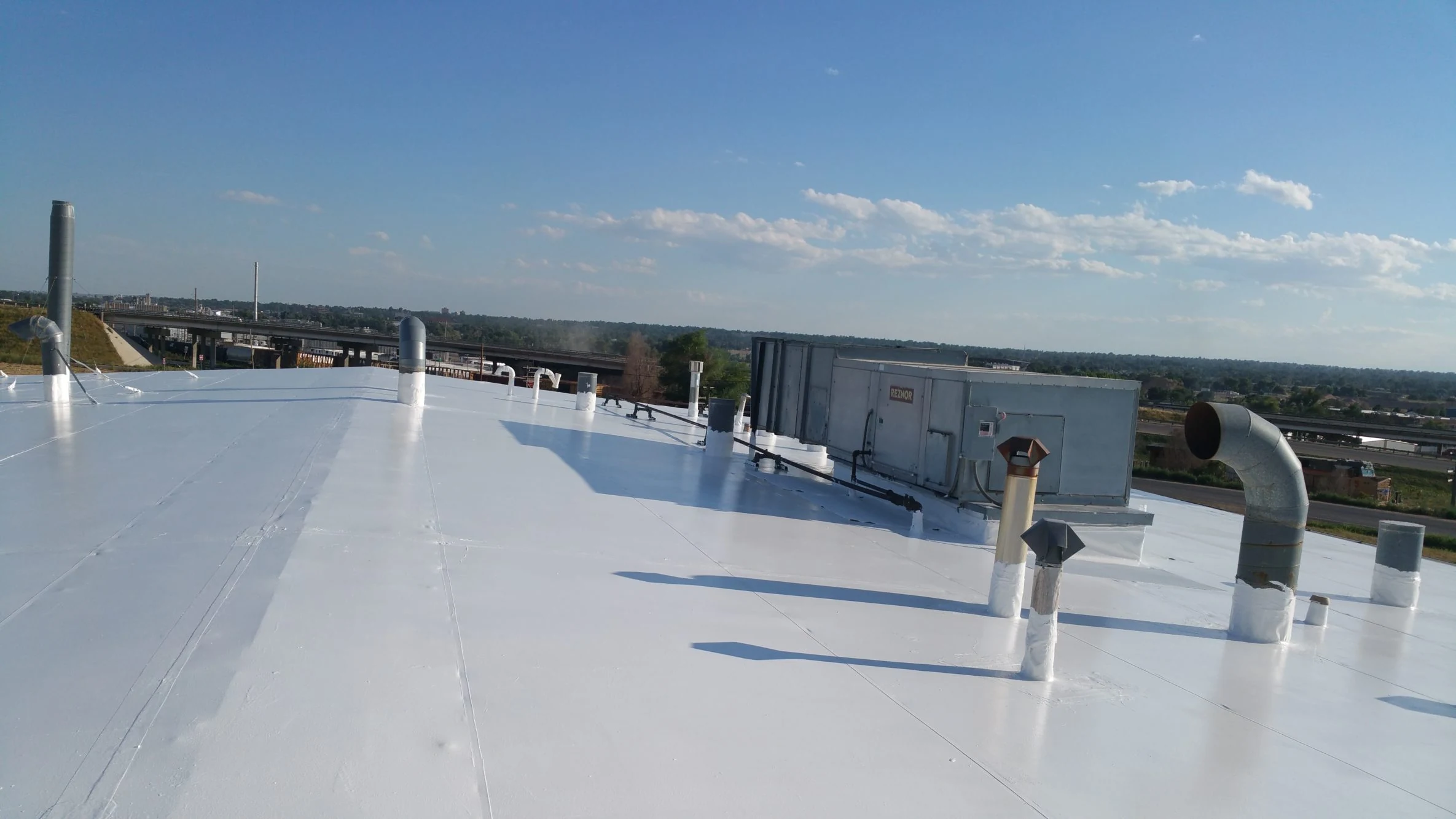
A reflective white topcoat also does double duty on the energy side, keeping deck temperatures down the same way a reflective membrane would, which matters on any building with real cooling-load exposure.
Wind and Snow Load Behavior
Because SPF is fully adhered and monolithic rather than mechanically fastened, it doesn't have the wind-uplift failure points a membrane system with fastener plates can develop. That's a genuine advantage given how strong the downslope wind events out of Provo Canyon can get on the valley floor. Snow load is a non-issue for the foam itself since it's bonded directly to the deck, though we still confirm structural capacity on older buildings before adding any roofing system.
- Older buildings with irregular roof geometry or poor original slope
- Roofs with chronic ponding and no clean tear-off budget available
- Buildings needing an insulation upgrade to meet current energy code
- Roofs with heavy penetration counts where continuous coverage helps
- Institutional buildings prioritizing long-term utility savings
Where SPF Isn't the Right Call
Foam requires a dry substrate and specific weather conditions during application, since humidity and temperature both affect cure quality. It's also not the system we'd spec on a brand-new building with a clean, well-sloped deck and no insulation deficiency; a standard single-ply membrane usually costs less and does the job with less ongoing recoat maintenance. SPF earns its place on buildings with a real insulation or drainage problem to solve, not as a default choice.
Spray application also needs a dry deck and a specific temperature and humidity range to cure properly, which narrows the practical installation windows here to spring and fall in most years, avoiding both winter cold and the humidity spikes that can come with summer monsoon-pattern storms. We plan project timing around that window rather than pushing an install into marginal conditions that would compromise cure quality. Because the foam cures quickly once applied, crews can often finish a roof section and get the base coat on the same day, limiting the amount of time any part of the roof sits exposed before its protective layer goes on, a real advantage on occupied buildings where construction-phase weather risk is a genuine concern for the owner.
Questions Provo Owners Ask About Spray Foam Roofs
How often does the protective coating need to be reapplied?
It depends on the coating type and UV exposure, and we can review manufacturer recoat intervals specific to the product during an inspection rather than quote a fixed number.
Can SPF go over an existing membrane roof?
Often yes, if the existing surface is clean, dry, and structurally sound, which is part of what makes it attractive for renovation projects instead of a full tear-off.
Does spray foam work in cold weather installation windows?
Application requires specific temperature and humidity conditions to cure properly, so we schedule SPF projects around Utah Valley's weather windows rather than forcing an install during marginal conditions.
Is foam roofing noisy or disruptive to install?
It's a spray application rather than a tear-off, so it's generally quieter and faster than a full membrane replacement, with less debris to manage on an occupied building.
What happens if the recoat maintenance gets skipped?
UV exposure will start degrading the exposed foam once the protective coating wears thin, which shortens the roof's service life. It's the one system on this list where ongoing maintenance isn't optional.